
 Checkout securely
How to Make the World Add Up: Ten Rules for Thinking Differently About Numbers
Condition: New
Free UK delivery
Thu 15 Oct
Time until the order cutoff
Delivery details
Royal Mail 2nd Class — Free
Dispatch — when it leaves us
The arrival date shown is calculated from the order cutoff and delivery days.
Full delivery informationKeep up to six books on this device for 30 days. Prices and availability are checked when shown. Clear to remove the history and switch this off.
Free returns within 60 days
- Not completely happy?
- We’ll refund or replace your order within 60 days.
- Terms and exclusions apply. See our returns policy.
Description
A BBC Radio 4 Book of the Week
When was the last time you read a grand statement, accompanied by a large number, and wondered whether it could really be true? Statistics are vital in helping us tell stories - we see them in the papers, on social media, and we hear them used in everyday conversation - and yet we doubt them more than ever.
But numbers - in the right hands - have the power to change the world for the better. Contrary to popular belief, good statistics are not a trick, although they are a kind of magic. Good statistics are not smoke and mirrors; in fact, they help us see more clearly. Good statistics are like a telescope for an astronomer, a microscope for a bacteriologist, or an X-ray for a radiologist. If we are willing to let them, good statistics help us see things about the world around us and about ourselves - both large and small - that we would not be able to see in any other way.
In How to Make the World Add Up, Tim Harford draws on his experience as both an economist and presenter of the BBC's radio show 'More or Less'. He takes us deep into the world of disinformation and obfuscation, bad research and misplaced motivation to find those priceless jewels of data and analysis that make communicating with numbers worthwhile. Harford's characters range from the art forger who conned the Nazis to the stripper who fell in love with the most powerful congressman in Washington, to famous data detectives such as John Maynard Keynes, Daniel Kahneman and Florence Nightingale. He reveals how we can evaluate the claims that surround us with confidence, curiosity and a healthy level of scepticism.
Using ten simple rules for understanding numbers - plus one golden rule - this extraordinarily insightful book shows how if we keep our wits about us, thinking carefully about the way numbers are sourced and presented, we can look around us and see with crystal clarity how the world adds up.
Book details
- Format:Paperback
- Pages:352 Pages
- Dimensions:194 x 126 x 28 mm
- Publication date:06 May 2021
- Publisher:Little, Brown Book Group
- Language:English
- ISBN10:0349143862
- ISBN-13:9780349143866
Related books
-
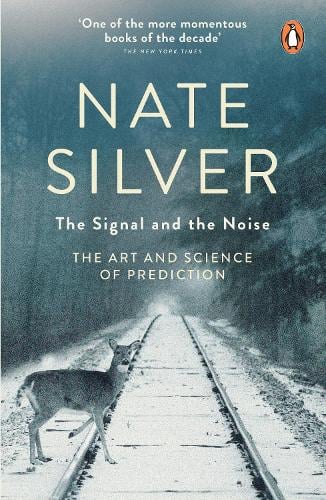
The Signal and the Noise: The Art and Science of Prediction
Nate Silver Paperback £3.15£14.99Save £11.84 (79%)79% off! -

Portfolio Management in Continuous Time: Numerical Applications in R and Python
Francesco Menoncin Paperback £55.79£74.99Save £19.20 (26%) -
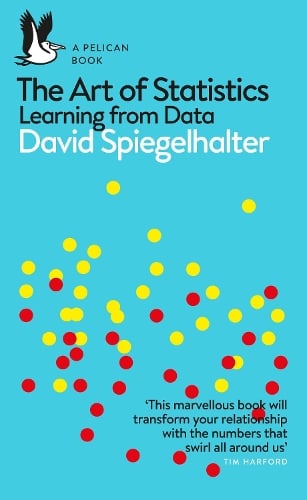
The Art of Statistics: Learning from Data - Pelican Books
David Spiegelhalter Paperback £4.39£10.99Save £6.60 (60%)60% off! -
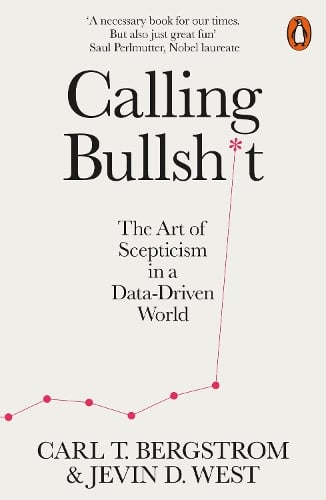
Calling Bullshit: The Art of Scepticism in a Data-Driven World
Jevin D. West Paperback £5.54£10.99Save £5.45 (50%)50% off! -
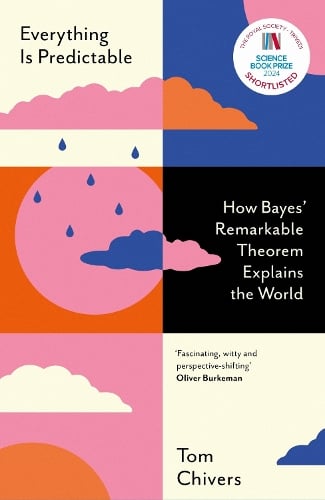
Everything Is Predictable: How Bayes' Remarkable Theorem Explains the World
Tom Chivers Paperback £9.08£10.99Save £1.91 (17%) -

Guide to Feistel Ciphers: Security Proofs and Cryptanalysis - Information Security and Cryptography
Jacques Patarin Hardback £62.99£69.99Save £7.00 (10%) -
The Art of Uncertainty: How to Navigate Chance, Ignorance, Risk and Luck - Pelican Books
David Spiegelhalter Hardback £9.86£22.00Save £12.14 (55%)55% off! -
Applied Statistics for Business and Management using Microsoft Excel
Linda Herkenhoff Hardback £80.09£99.99Save £19.90 (20%)