
 Checkout securely
On the Genealogy of Morals
Condition: New
Free UK delivery
Thu 15 Oct
Time until the order cutoff
Delivery details
Royal Mail 2nd Class — Free
Dispatch — when it leaves us
The arrival date shown is calculated from the order cutoff and delivery days.
Full delivery informationKeep up to six books on this device for 30 days. Prices and availability are checked when shown. Clear to remove the history and switch this off.
Free returns within 60 days
- Not completely happy?
- We’ll refund or replace your order within 60 days.
- Terms and exclusions apply. See our returns policy.
Description
The companion book to Beyond Good and Evil, the three essays included here offer vital insights into Nietzsche's theories of morality and human psychology.
Nietzsche claimed that the purpose of The Genealogy of Morals was to call attention to his previous writings. But in fact the book does much more than that, elucidating and expanding on the cryptic aphorisms of Beyond Good and Evil and signalling a return to the essay form. In these three essays, Nietzsche considers the development of ideas of 'good' and 'evil'; explores notions of guilt and bad consience; and discusses ascetic ideals and the purpose of the philosopher. Together, they form a coherent and complex discussion of morality in a work that is more accessible than some of Nietzsche's previous writings.
Friedrich Nietzsche was born near Leipzig in 1844. When he was only twenty-four he was appointed to the chair of classical philology at Basel University. From 1880, however, he divorced himself from everyday life and lived mainly abroad. Works published in the 1880s include The Gay Science, Thus Spoke Zarathustra, Beyond Good and Evil, On the Genealogy of Morals, Twilight of the Idols and The Antichrist. In January 1889, Nietzsche collapsed on a street in Turin and was subsequently institutionalized, spending the rest of his life in a condition of mental and physical paralysis. Works published after his death in 1900 include Will to Power, based on his notebooks, and Ecce Homo, his autobiography.
Michael A. Scarpitti is an independent scholar of philosophy whose principal interests include English and German thought of the eighteenth and nineteenth centuries, as well as exegesis and translation theory.
Robert C. Holub is currently Ohio Eminent Scholar and Professor of German at the Ohio State University. Among his published works are monographs on Heinrich Heine, German realism, Friedrich Nietzsche, literary and aesthetic theory, and Jrgen Habermas.
Book details
- Format:Paperback
- Pages:208 Pages
- Dimensions:197 x 128 x 11 mm
- Publication date:07 November 2013
- Publisher:Penguin Books Ltd
- Language:English
- ISBN10:0141195371
- ISBN-13:9780141195377
More by Friedrich Nietzsche
-

Thus Spoke Zarathustra
Friedrich Nietzsche Paperback £6.54£9.99Save £3.45 (35%) -
Beyond Good and Evil
Friedrich Nietzsche Paperback £4.09£9.99Save £5.90 (59%)59% off! -

Beyond Good and Evil - Penguin Pocket Hardbacks
Friedrich Nietzsche Hardback £9.31£14.99Save £5.68 (38%) -
The Birth of Tragedy: Out of the Spirit of Music
Friedrich Nietzsche Paperback £6.77£8.99Save £2.22 (25%) -

Ecce Homo: How One Becomes What One is - Penguin Archive
Friedrich Nietzsche Paperback £5.39£5.99Save £0.60 (10%)
Related books
-
Leviathan
Thomas Hobbes Paperback £7.80£12.99Save £5.19 (40%) -
Critique of Pure Reason
Immanuel Kant Paperback £9.89£18.99Save £9.10 (48%)48% off! -

The Undiscovered Self - Routledge Great Minds
Carl Gustav Jung Paperback £9.89£21.99Save £12.10 (55%)55% off! -
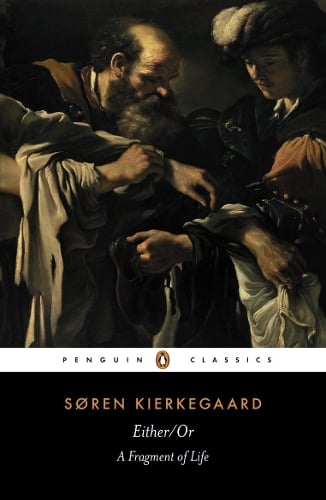
Either/Or: A Fragment of Life
Søren Kierkegaard Paperback £10.79£12.99Save £2.20 (17%) -
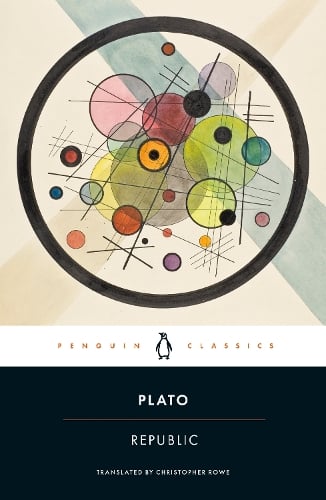
Republic
Plato Paperback £9.21£10.99Save £1.78 (16%) -
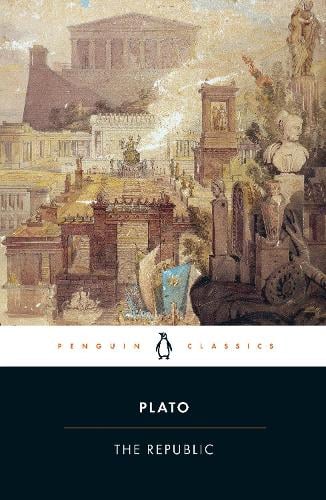
The Republic
Plato Paperback £9.89£10.99Save £1.10 (10%) -
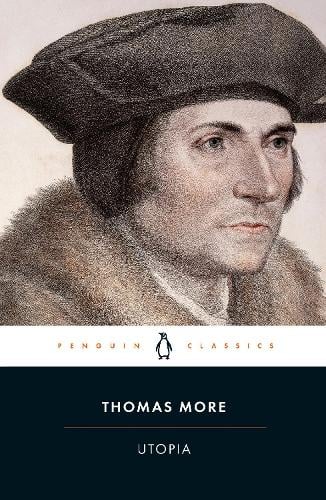
Utopia
Thomas More Paperback £2.70£8.99Save £6.29 (70%)70% off! -
Discipline and Punish: The Birth of the Prison - Penguin Modern Classics
Michel Foucault Paperback £9.89£12.99Save £3.10 (24%)