
 Checkout securely
The Wealth of Nations: Books I-III - The Wealth of Nations
Condition: New
Free UK delivery
Mon 19 Oct
Time until the order cutoff
Delivery details
Royal Mail 2nd Class — Free
Dispatch — when it leaves us
The arrival date shown is calculated from the order cutoff and delivery days.
Full delivery informationKeep up to six books on this device for 30 days. Prices and availability are checked when shown. Clear to remove the history and switch this off.
Free returns within 60 days
- Not completely happy?
- We’ll refund or replace your order within 60 days.
- Terms and exclusions apply. See our returns policy.
Description
Originally delivered in the form of lectures at Glasgow, Adam Smith's The Wealth of Nations Books I-III laid the foundations of economic theory in general and 'classical' economics in particular, and this Penguin Classics edition is edited with an introduction and notes by Andrew Skinner.
The publication of The Wealth of Nations in 1776 coincided with America's Declaration of Independence, and with this landmark treatise on political economy, Adam Smith paved the way for modern capitalism, arguing that a truly free market - fired by competition yet guided as if by an 'invisible hand' to ensure justice and equality - was the engine of a fair and productive society. Books I - III of The Wealth of Nations examine the 'division of labour' as the key to economic growth, by ensuring the interdependence of individuals within society. They also cover the origins of money and the importance of wages, profit, rent and stocks; but the real sophistication of his analysis derives from the fact that it encompasses a combination of ethics, philosophy and history to create a vast panorama of society.
This edition contains an analytical introduction offering an in-depth discussion of Smith as an economist and social scientist, as well as a preface, further reading and explanatory notes.
Adam Smith (1723-90) was born in Glasgow and educated at Glasgow and Oxford. Two years after his return to Scotland, Smith moved to Edinburgh, where he delivered lectures on Rhetoric. In 1751 Smith was appointed Professor of Logic at Glasgow, but was translated to chair of Moral Philosophy in 1752. The Theory of Moral Sentiments was published in 1759, and The Wealth of Nations in 1776, the same year as the Declaration of Independence.
If you enjoyed The Wealth of Nations, you might like Karl Marx's Capital, also available in Penguin Classics.
Book details
- Format:Paperback
- Pages:576 Pages
- Dimensions:198 x 129 x 25 mm
- Publication date:25 February 1982
- Publisher:Penguin Books Ltd
- Language:English
- ISBN10:0140432086
- ISBN-13:9780140432084
Related books
-
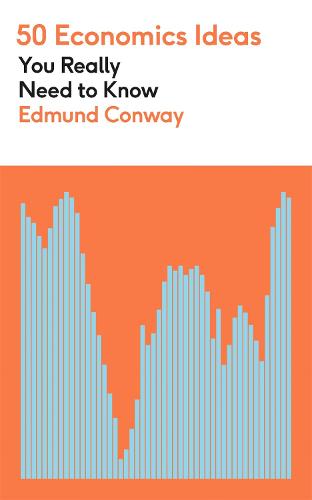
50 Economics Ideas You Really Need to Know: A complete introduction to the key concepts of finance and economics - 50 Ideas You Really Need to Know series
Edmund Conway Paperback £4.80£9.99Save £5.19 (52%)52% off! -

Portfolio Management in Continuous Time: Numerical Applications in R and Python
Francesco Menoncin Paperback £55.79£74.99Save £19.20 (26%) -

A Brief History of Equality
Thomas Piketty Hardback £9.89£23.95Save £14.06 (59%)59% off! -

Capital and Ideology
Thomas Piketty Hardback £20.38£33.95Save £13.57 (40%) -

Equality: What It Means and Why It Matters
Thomas Piketty Hardback £8.53£12.00Save £3.47 (29%) -

Nature, Culture, and Inequality
Thomas Piketty Hardback £7.92£12.99Save £5.07 (39%) -

How to Teach Economics to Your Dog
Rebecca Campbell Paperback £3.08£10.99Save £7.91 (72%)72% off! -
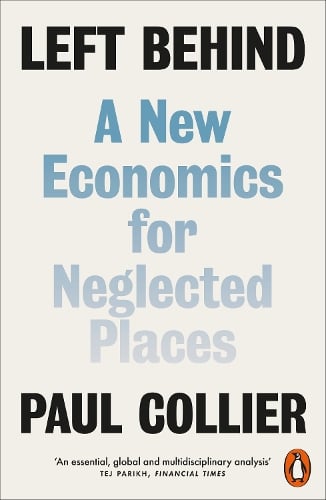
Left Behind: A New Economics for Neglected Places
Paul Collier Paperback £9.89£10.99Save £1.10 (10%)